
Ballet, contemporary, jazz: what are the differences?
Three broad families, three ways of inhabiting your body. Enough to find your feet before choosing a class or stepping into a theatre.
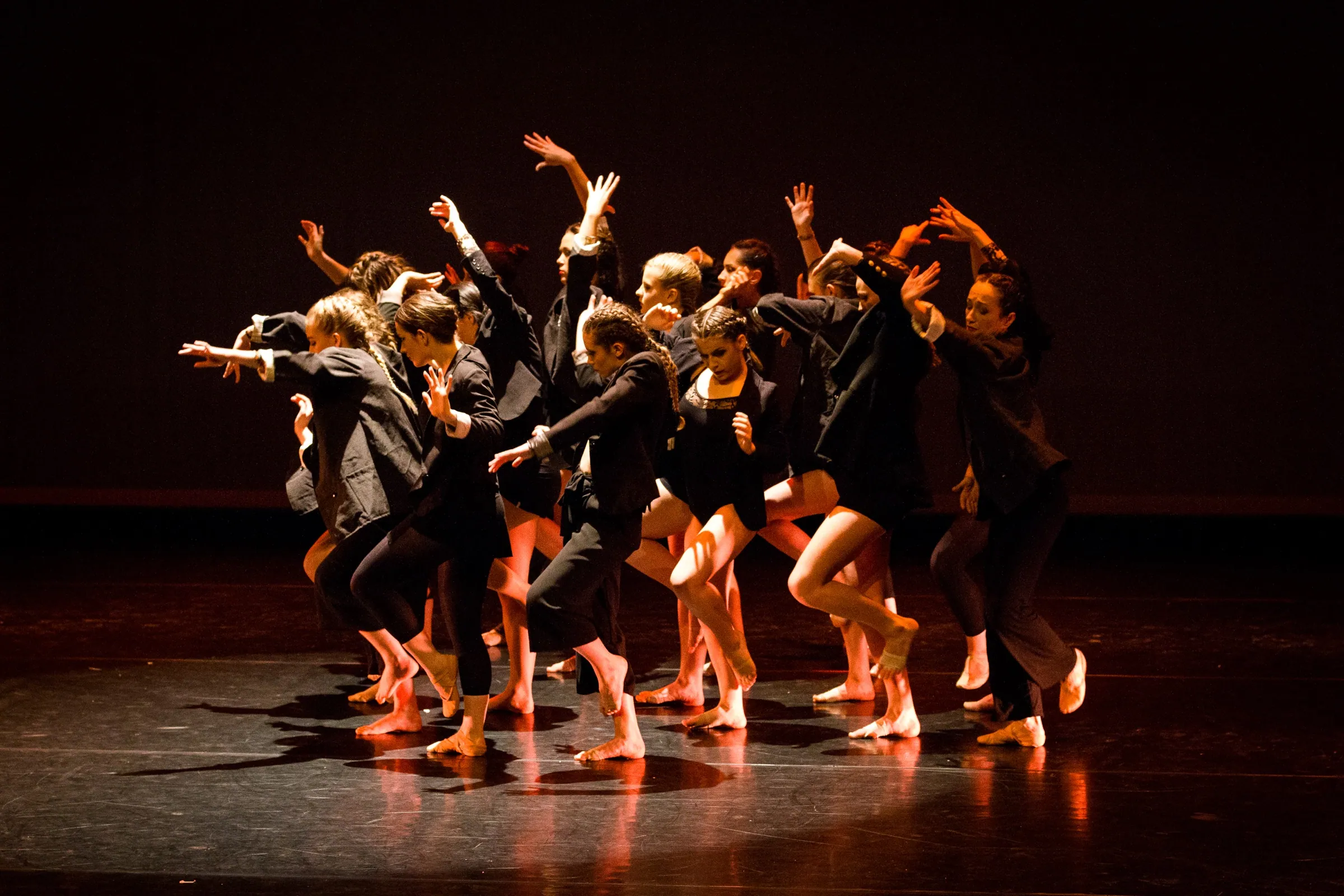
Ballet rests on a codified vocabulary and the pursuit of line. Contemporary dance invents its movement to serve a statement. Modern jazz relies on energy and musicality. Many dancers practise all three, which feed one another.
Ballet
It is the oldest and most codified. It rests on a precise vocabulary, learned in a set order: plié, tendu, arabesque. Everything reaches for line, elevation, lightness.
Ballet builds the body in depth: placement, turnout, carriage. Many contemporary dancers have this grounding, even if they later move away from it.
Contemporary dance
It takes the opposite view of ballet. No imposed vocabulary, deliberate floor work, and movement in the service of an idea. It seeks weight, the fall, release, rather than the perfect vertical.
It is an author's dance: each choreographer develops their own writing. Two contemporary pieces may have nothing in common.
Modern jazz
Born in the United States, jazz lives on energy and rhythm. Isolations, accents, drive: it is often the most immediate way in, closely tied to the music.
It borrows rigour from ballet and freedom from contemporary dance, while keeping a pulse of its own.
Which style to choose?
There is no right choice, and no required order. A beginner can start with any of them. What matters is the pleasure of dancing and consistency.
In Nantes, the school L'Atelier du Mouvement teaches these disciplines at every age, and its company, Mozaïk Ballet', extends that training into contemporary creation. To decide, nothing beats a trial class.