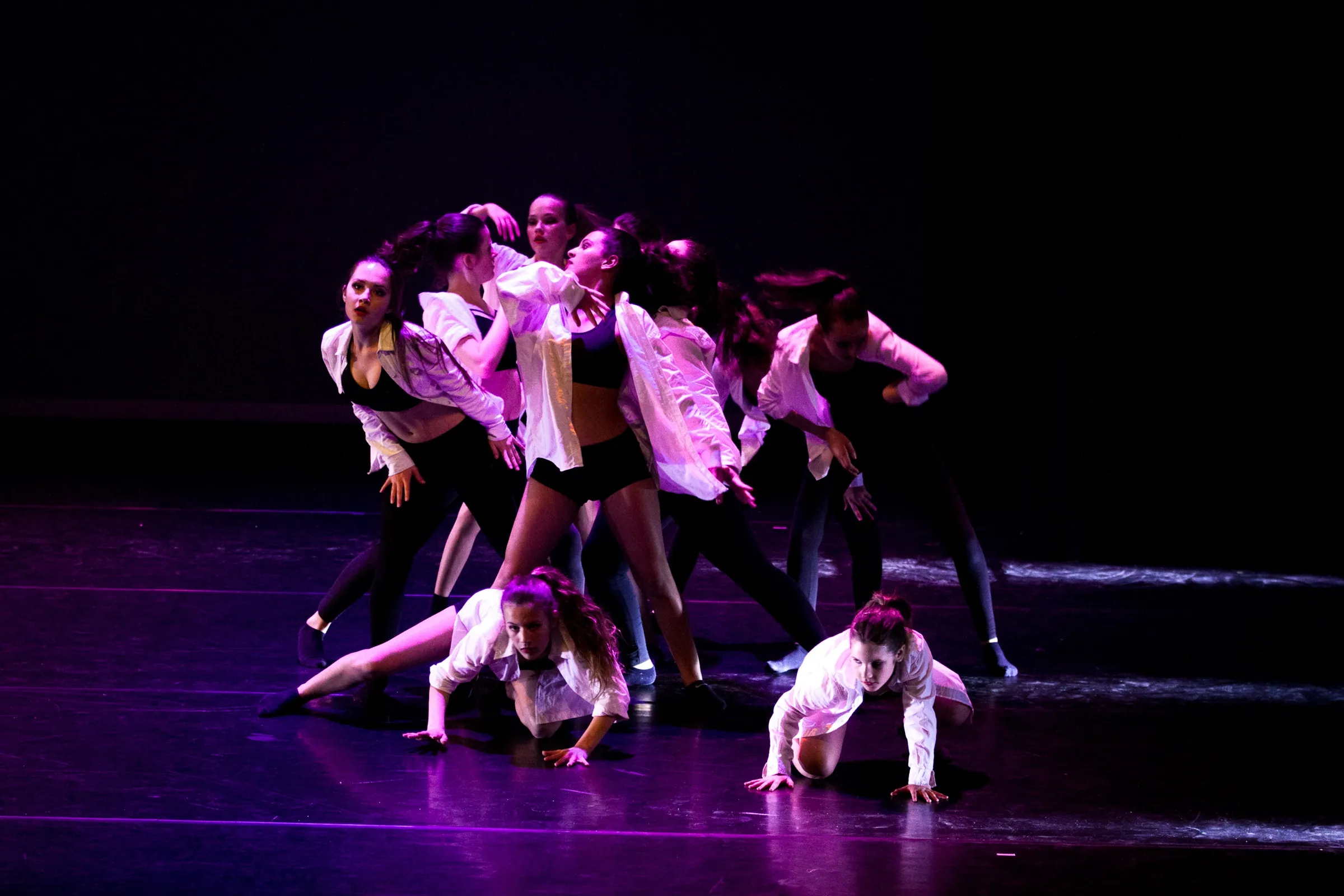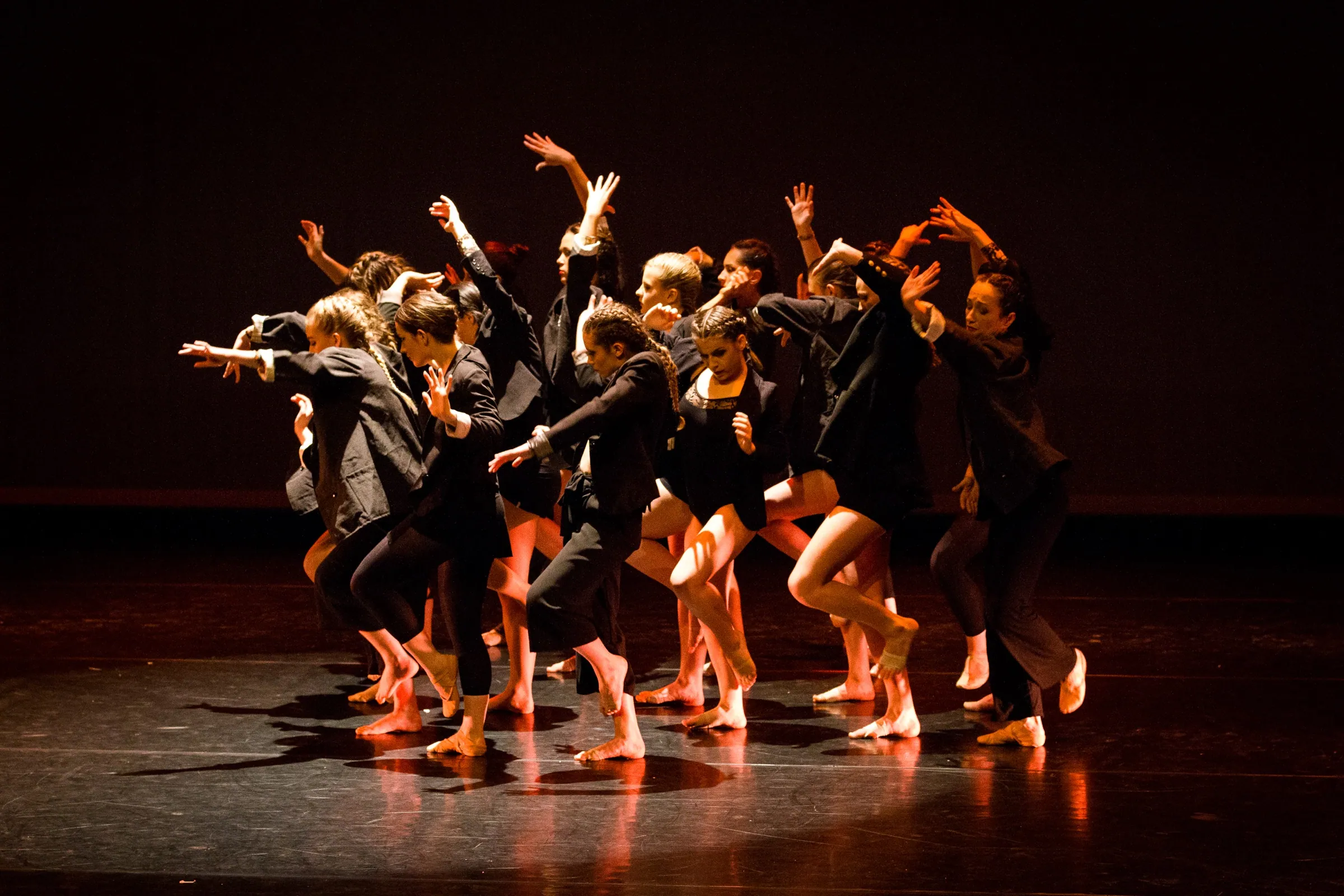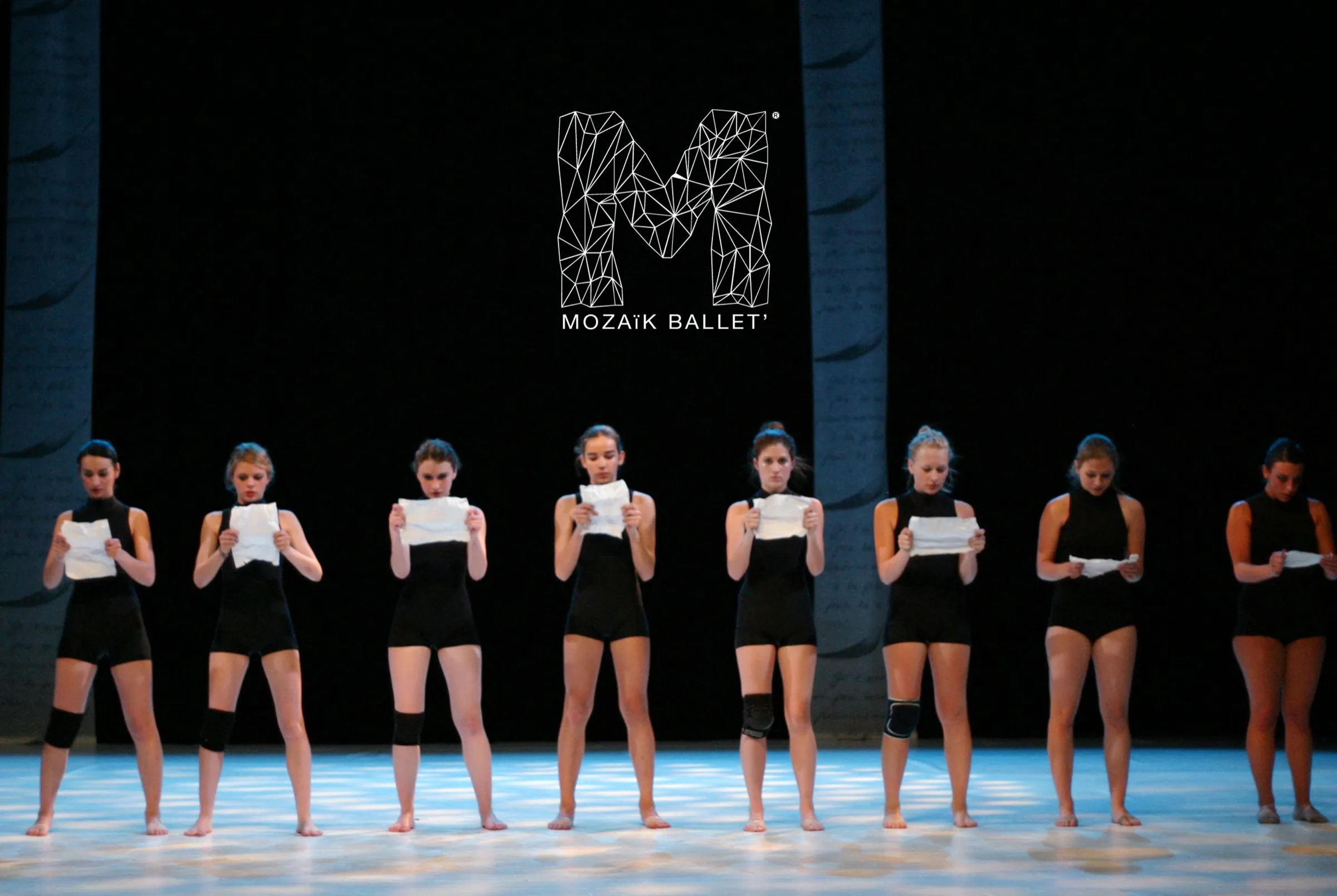
The company of L'Atelier du Mouvement
Mozaïk Ballet' is the company of the dance school L'Atelier du Mouvement, in Nantes. School and company share the same director, Alexandra Gérard, a teacher certified by the French Ministry of Culture: one trains, the other creates, and dancers move naturally from the studio to the stage.
The company began in 2002, choosing to train its own dancers of all ages rather than take on an existing repertoire. Its line of research would be the making of an original, philosophical body of work aimed at the drifts of society, with one underlying theme: the duality between confinement and freedom. The first seven works followed that line.
The company has been invited to dance at the Cité des Congrès in Nantes, in a 2,000-seat auditorium.